


Build the Person, Build the Player: John Wooden’s Pyramid of Success

A hitter can do everything right and make an out. A pitcher can execute a good pitch and watch it fall for a hit. If success means only what appears on the scoreboard, athletes will spend much of their time judging themselves by outcomes they cannot fully control.
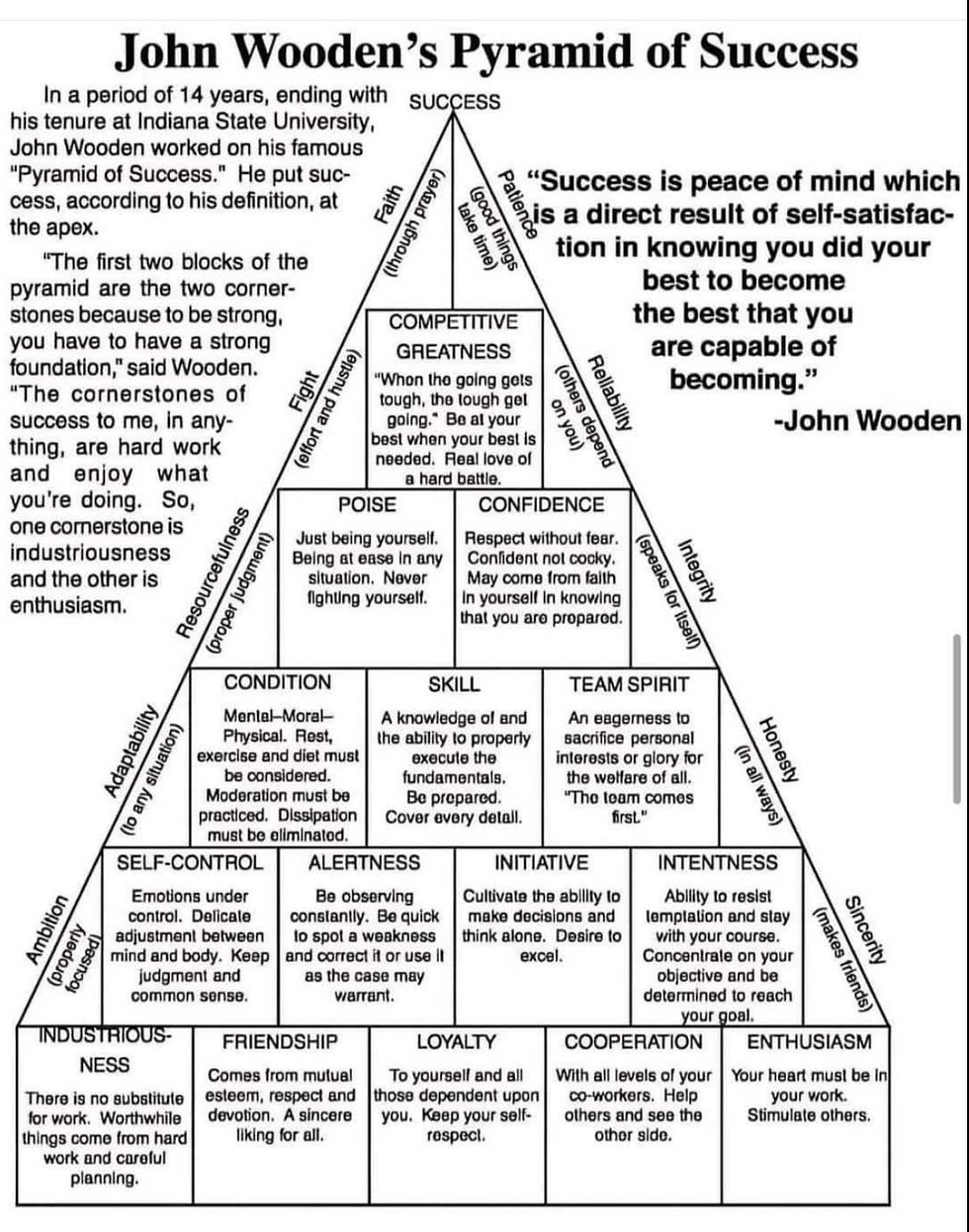
Coach John Wooden offered a different measure. He defined success as the peace of mind that comes from knowing you made the effort to do the best of which you are capable. His Pyramid of Success turns that idea into a daily practice: develop the person, prepare with purpose, and bring your best to the moment in front of you.
The foundation: How you show up for others
The pyramid begins with industriousness, friendship, loyalty, cooperation, and enthusiasm. These are the habits that make individual growth and team success possible.
Industriousness is the work an athlete does when progress is hard to see. Friendship and loyalty mean respecting teammates and staying dependable through slumps and setbacks. Cooperation means listening, contributing, and accepting that someone else’s idea may help the team. Enthusiasm brings energy to that work.
A young hitter might show all five during a teammate’s at-bat: paying attention to the pitcher, sharing a useful observation, and celebrating the teammate’s success. The athlete is learning while helping someone else compete.
The next level: How you respond
Wooden’s next four blocks are self-control, alertness, initiative, and intentness. Together, they describe an athlete who can notice what is happening and choose a useful response.
Self-control matters after a called third strike. The athlete feels the disappointment, takes a breath, and prepares to contribute on defense. Alertness means seeing that the pitcher’s release or movement has changed. Initiative means acting on that information—asking a question, adjusting a plan, or trying a different approach. Intentness means staying with the work long enough to learn from it.
A coach can teach these qualities between pitches. Instead of asking only, “Did you get a hit?” ask, “What did you see? What was your plan? What will you do on the next pitch?”
Preparation makes performance possible
The middle of the pyramid holds condition, skill, and team spirit. Athletes need the physical and mental readiness to compete. They need skill built through attentive practice. They also need to care about the team’s success alongside their own.
For a hitter, skill includes recognizing a pitch, deciding whether to swing, and bringing the bat to the ball in space and time. Practice should give the athlete chances to make those decisions against changing speed, location, and movement. A good swing in an easy drill is useful; learning when and how to use it against a real pitch is the larger task.
Team spirit appears in less visible moments: a player who shares what she noticed from the on-deck circle, supports a teammate after an error, or stays ready for a late-inning opportunity.
Confidence is earned in the work
Above preparation sit poise and confidence. Poise is the ability to remain yourself under pressure. Confidence grows when you know you have prepared and can meet the next challenge.
Neither requires pretending to feel calm all the time. A hitter can feel nervous with runners in scoring position and still follow a routine: breathe, find the pitcher’s release, commit to a plan, and respond to the pitch. The routine gives the athlete something useful to do with attention when the moment feels big.
At the top, Wooden placed competitive greatness: being at your best when your best is needed. That does not promise a hit in every important at-bat. It asks the athlete to bring preparation, attention, courage, and team commitment into that at-bat.
What the pyramid asks of a coach
The pyramid also gives coaches a responsibility. If we say that effort, character, and growth matter, we must notice and teach them—not only praise the player who gets the game-winning hit.
Recognize the hitter who stayed with her plan after two difficult at-bats. Recognize the pitcher who made a thoughtful adjustment. Recognize the teammate who offered useful support without seeking credit. Then help each athlete identify one specific step for the next practice or game.
Wooden’s pyramid includes faith and patience near its apex. Growth takes time, and athletes cannot force every result to arrive on their preferred schedule. Our job is to help them keep building.
The next time a player walks away from the plate, the first question need not be, “What did you get?” Try asking: “What did you bring to that at-bat, and what did it teach you?”
That is a question an athlete can use after a hit, an out, a win, or a loss. And its answer can help build a player—and a person—for the long run.
Comments